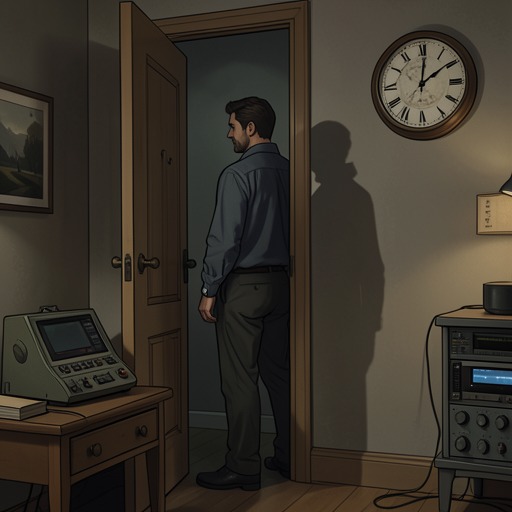
Zacarias
The Shadow of the WindZacarias is the black-clad angel who haunts Jacinta Coronado’s dreams, foretelling a life of grief and promising that she will one day have a daughter. His predictions shape Jacinta’s journey from Toledo to Barcelona and her devotion to Penelope Aldaya; the uncertainty over whether he is a real messenger or a dream figure keeps prophecy and private belief in productive tension.
Identity and First Appearances
Zacarias enters Jacinta’s story through dreams that begin after a fever nearly kills her at the age of four. That fever itself remains unexplained: some attribute it to the sting of a large red scorpion that appeared in the house and vanished, while others blame a supposed mad nun. Against this uncertain background, Jacinta’s dreams become a recurring source of visions of the past, the future, and the hidden secrets of Toledo’s streets. Zacarias is one of their most persistent figures, an angel dressed in black, accompanied by a dark cat with yellow eyes and an ominous association with sulphur.
In the dreams, his knowledge seems confirmed by specific predictions. He foretells the precise day and hour of the death of Jacinta’s uncle Benancio, a seller of ointments and holy water. He also reveals where Jacinta’s mother hides a bundle of letters from a financially poor but anatomically knowledgeable medical student. These revelations establish Zacarias not merely as a frightening dream presence but as a figure whose claims to foreknowledge appear to be borne out in Jacinta’s experience.
Prophecy and Jacinta’s Early Life
Zacarias gives Jacinta a bleak account of what lies ahead. He tells her that something evil is lodged in her stomach and wishes her harm, that she will know the love of only one man, and that this love will be selfish and will break her spirit. He also predicts that she will witness the death of everything she loves and visit hell before reaching heaven. When Jacinta has her first period, Zacarias and the cat disappear from her dreams. Years later, she remembers their visits with tears because, in her understanding, his prophecies have come true.
The prophecies take on particular force when doctors tell Jacinta that she will never be able to have children. Her husband leaves after three years of marriage, and Jacinta is left grieving the loss of the motherhood she most wants. In the absence of Zacarias, she speaks to God in private, asking to become a mother and to feel like a woman. The earlier prediction of an empty, painful love and a life marked by loss thus stands beside her longing for a child: Zacarias’s role is bound to the contrast between what Jacinta is told she cannot have and what she continues to desire.
The Cathedral Vision and the Promise of a Child
One day, while Jacinta is praying in Toledo Cathedral, a man she recognizes as Zacarias approaches her. He looks unchanged, wears his familiar dark clothing, and holds the cat. Jacinta later cannot decide whether the encounter happened in waking life or was another dream. The narrative preserves that uncertainty rather than resolving it, even as the encounter becomes a turning point in her understanding of her future.
Zacarias tells Jacinta that God does not intend to answer her prayers, but promises that he will send her a child. He whispers the word “Tibidabo” and kisses her; she then has a vision of a daughter who will come to her from a distant city set between mountains and sea. The parish deacon, after listening to Jacinta’s account, identifies the city as Barcelona and its great church as the Expiatory Temple of the Sagrada Familia. Jacinta sets out for Barcelona with clothes and a missal, encouraged by the belief that the vision will come to pass.
Barcelona and the Changing Image
The city Jacinta reaches is not the enchanted place she expected. After months of hardship, she finds work in a store belonging to Aldaya and Sons and lives in poverty in a windowless room in the Ribera quarter. The promise of a daughter remains unfulfilled, and Jacinta begins to fear that Zacarias has misled her and that she has come to Barcelona only to suffer. The gap between the city in her vision and the harshness of her actual life makes the prophecy a source of both hope and vulnerability.
When Don Ricardo Aldaya notices Jacinta’s care for a sick foreman’s daughter, he brings her to the mansion to look after his pregnant wife. That night, Zacarias returns in a dream, but his appearance has changed: he is no longer dressed in black, his former cat is absent, and a white snake is coiled around him. Jacinta later tells an eighteen-year-old Julián Carax that, on the day she left her pension, she learned that her friend Ramoneta had been murdered and Ramoneta’s baby had died. The dream’s altered imagery arrives alongside another devastating loss, reinforcing the association between Zacarias’s appearances and Jacinta’s expectations of love, motherhood, and death.
Penelope and Narrative Significance
Four months after Jacinta enters the Aldaya household, Jorge Aldaya is born. Jacinta gives him the affection his mother does not provide, but recognizes that he is not the promised child. Years later, Penelope Aldaya is born in the spring of 1902. Jacinta becomes her devoted caregiver, watching over her, preparing her meals, sewing her clothes, and tending to her through illness and childhood milestones. She does not tell Penelope that she loves her; instead, she expresses that love through constant acts of care. In Jacinta’s life, the long-awaited daughter is therefore realized through her bond with Penelope, though the evidence does not establish that Zacarias literally caused or arranged the birth.
Zacarias also remains present in the family’s surroundings as Jacinta understands them. The Aldaya mansion is reputed by the servants to be under a spell, but Jacinta attributes what others call magic to the presence she encounters in dreams. By the time Penelope is born, Zacarias no longer resembles the angel she remembers from Toledo: he appears as a wolf walking upright. This changing form, together with Jacinta’s uncertainty about the cathedral encounter, prevents him from becoming a straightforwardly confirmed supernatural character. He functions instead as the figure through whom Jacinta interprets coincidence, hardship, and fulfilled expectation, while the repeated transformations make her visions inseparable from the unstable boundary between dream and waking life.